Apply for this course
Please select when you would like to start:
Use the apply button to begin your application.
If you require a Student visa and wish to study a postgraduate course on a part-time basis, please read our how to apply information for international students to ensure you have all the details you need about the application process.
Why study this course?
This research-led Textile Design MA addresses the needs of graduates from textile design and related discipline backgrounds, or those who wish to collaborate with professionals in the field. Our Textile Design MA is one of several postgraduate design courses that co-exist at our School of Art, Architecture and Design, offering rich opportunities for the collaborative multidisciplinary approach that is a feature of the current and future design sector and a requirement for success in the field.
Take your career prospects to the next level
This course addresses the needs of graduates from textile design and related discipline backgrounds, or those who wish to collaborate with professionals in the field
Become a pioneering textile designer
Graduates of this course will challenge conventional ideas of what textiles are, and design textiles and textile products that have not yet been conceptualised
Learn to work as a well-rounded design professional
You will learn to imbue your work with meaning, to use it to communicate, to engage emotions and inspire response
Course details
You will be required to have:
- a first class or strong upper second class degree, or equivalent, in a related subject
Applicants will also be expected to present a portfolio and provide a statement demonstrating their ambition for the subject area and for studying at postgraduate level.
A related undergraduate degree plus related employment, or consultancy within the field can be considered alongside the portfolio and statement.
Accreditation of Prior Learning
Any university-level qualifications or relevant experience you gain prior to starting university could count towards your course at London Met. Find out more about applying for Accreditation of Prior Learning (APL).
English language requirements
To study a degree at London Met, you must be able to demonstrate proficiency in the English language. If you require a Student visa (previously Tier 4) you may need to provide the results of a Secure English Language Test (SELT) such as Academic IELTS. This course requires you to meet our standard requirements.
If you need (or wish) to improve your English before starting your degree, the University offers a Pre-sessional Academic English course to help you build your confidence and reach the level of English you require.
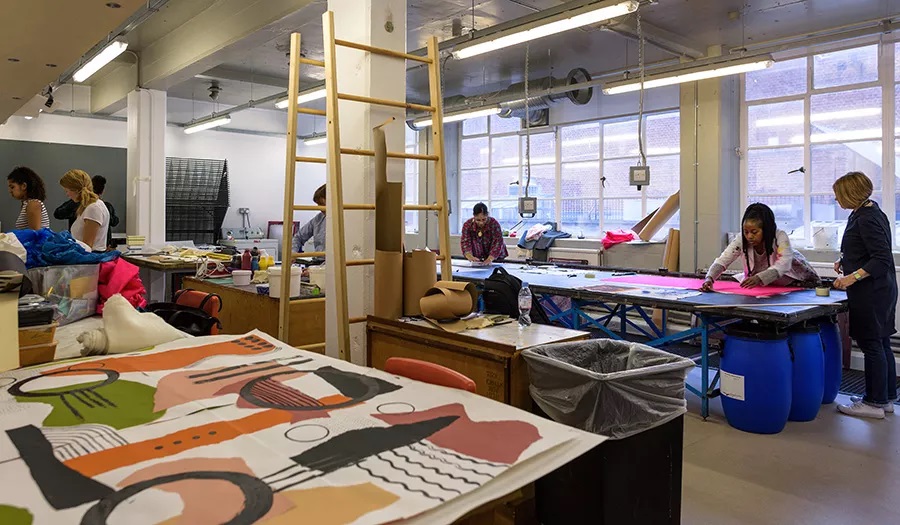
You'll be assessed through portfolios of written, research, visual and physical project work, all directly related to the requirements of practice in the field.
The MA is concluded with a major project in which you'll select an area of study, formulate your own argument or theoretical position and produce an independent body of work. The project challenges you to study in a topic that interests you, which will test your creative ambition. This work will be exhibited at the MA graduation show in our central London location.
The creative industry in the UK is huge and about half of all those involved in the design sector work in London. Completing our course provides you with the expertise to forge a successful career and lead within these burgeoning fields. With a community supporting one of the highest concentrations of designers and related businesses in the world, our unique location in the East End of London offers many opportunities for students and professionals to showcase cutting-edge design within related industries and venues.
Graduates of the course will often work as textile artists, freelance designers and consultants in the textiles sector, but may also work in the creative industries in London, across the UK and overseas. You could also find employment as an in-house designer for furniture and homeware companies or fashion houses, interior practices and manufacturing companies, both large and small. Career paths in art, trend analysis, retail buying & management, textile and design journalism, education and marketing are also open to you on completion of this course.
Graduates of the course often aim to work as self-employed designers and consultants in the furniture sector, but may also work for design consultancies in London, across the UK and overseas. Graduates may work as in-house designers for manufacturing companies both large and small, including for contract furniture companies and other businesses that require design input such as exhibition and event companies, cultural institutions, interior design practices. Others gain employment as independent design consultants, working as suppliers of design expertise to a variety of businesses or continue within design research. Graduates also have career paths open in design research, design journalism, cultural institutions, education and marketing.
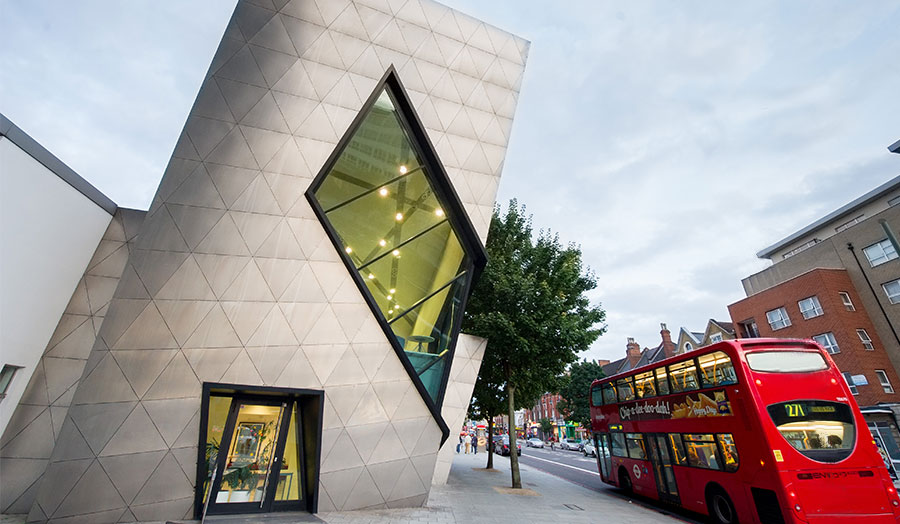
We currently have three locations in Holloway, Aldgate and Shoreditch. As we evolve as a University, we'll be reviewing the use of these spaces to ensure all our students have access to the facilities and study areas they need to succeed. This means the campus where this course is taught may change over time.
The experience of our students will always be our top priority and we'll notify applicants and students of any changes to their teaching location at the earliest opportunity.
If you've already studied your undergraduate degree with us, as a graduate of London Met, you'll be entitled to a 20% discount on any further study with us.
* exclusions apply
Please note, in addition to the tuition fee there may be additional costs for things like equipment, materials, printing, textbooks, trips or professional body fees.
Additionally, there may be other activities that are not formally part of your course and not required to complete your course, but which you may find helpful (for example, optional field trips). The costs of these are additional to your tuition fee and the fees set out above and will be notified when the activity is being arranged.
How to apply
Use the apply button to begin your application.
If you require a Student visa and wish to study a postgraduate course on a part-time basis, please read our how to apply information for international students to ensure you have all the details you need about the application process.
When to apply
You are advised to apply as early as possible as applications will only be considered if there are places available on the course.
To find out when teaching for this degree will begin, as well as welcome week and any induction activities, view our academic term dates..jpg)



.jpg)