Apply for this course
Please select when you would like to start:
Use the apply button to begin your application.
If you require a Student visa and wish to study a postgraduate course on a part-time basis, please read our how to apply information for international students to ensure you have all the details you need about the application process.
Why study this course?
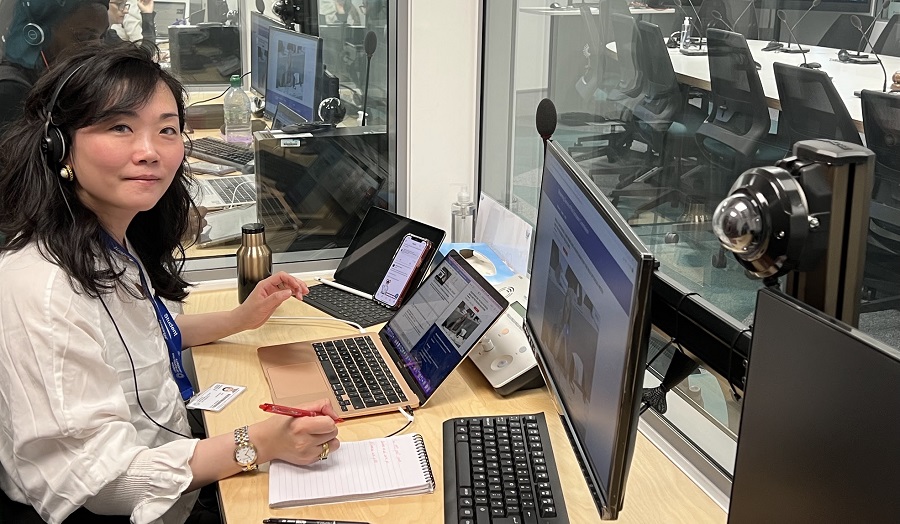
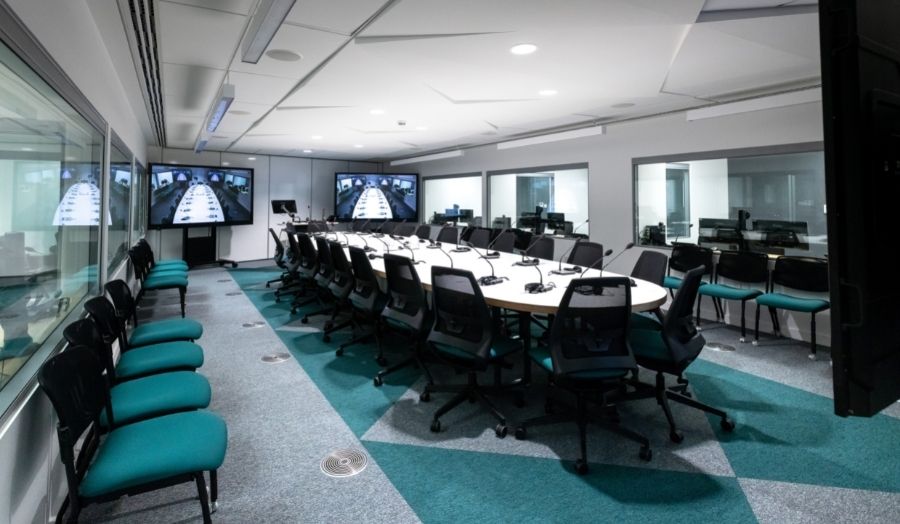
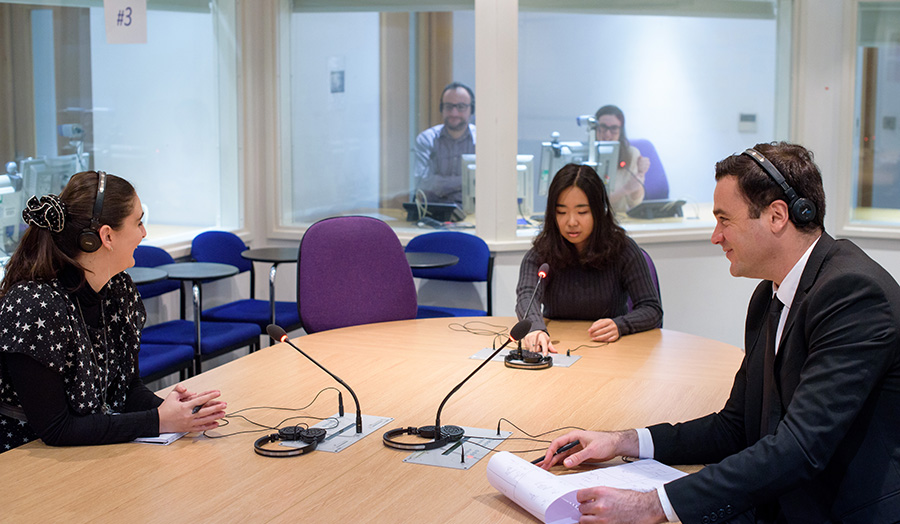
The Interpreting MA prepares you for work mainly as a professional conference interpreter for international organisations and the private market. Languages offered include English, French, German, Italian, Japanese, Polish, Russian and Spanish. You’ll benefit from work placements, site visits and dummy booth practice at the European Commission, the Court of Justice of the European Union, the International Maritime Organisation and the United Nations (Geneva and Vienna). It’s suitable for translators and linguists new to the field but would also benefit practising interpreters without formal qualifications.
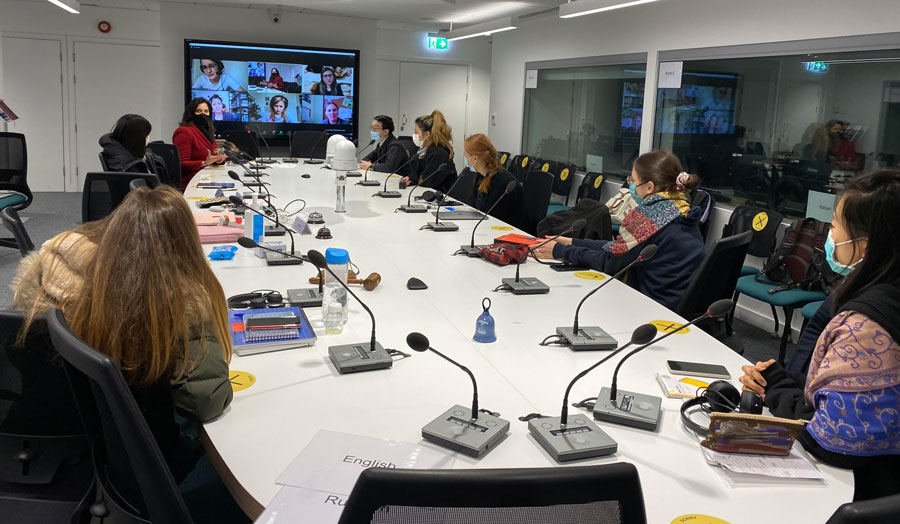
This course offers a distance learning option for full time (one year) and part time (two years) students. Students from both courses are taught together in a synchronous hybrid mode as one community of learners.
Choose from a wide variety of languages
Languages offered include English, French, German, Italian, Japanese, Polish, Russian, Spanish and more
Benefit from extra-curricular activities
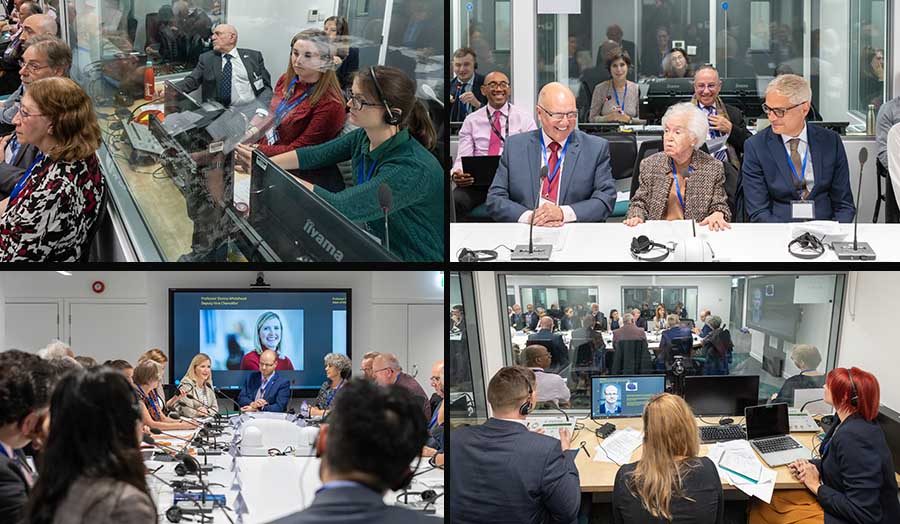
You’ll be able to attend work placements, site visits and dummy booth practice at the European Commission, the Court of Justice of the European Union, the International Maritime Organisation and the United Nations (Geneva and Vienna)
Take your career prospects to the next level
This course is suitable for translators and linguists new to the field but would also benefit practising interpreters without formal qualifications
Course details
You will be required to have:
- a 2.1 first degree or a 2.2 with professional experience in interpreting (candidates with substantial experience as a professional interpreter but no degree will also be considered)
- certificate and diploma-level English and one other language, or MA level English and one or two other language(s)
- near-native proficiency in your first foreign language (language B) and a good command of your second foreign language (language C)
- a very good command of English with a Cambridge Certificate of Proficiency in English (CPE): Grade AM
Entrance aptitude test
Application forms are processed by the admissions tutor. Once you've demonstrated that you match the entry criteria, you'll be invited to London Metropolitan University to attend the entrance aptitude test. For international students, the test can be done remotely.
The entrance aptitude test is free and runs on Fridays between 10am and 1pm twice a month. It includes:
- translations into and from English
- presentations in the various language combinations
- consecutive interpreting into the A language (mother tongue)
- essay writing
- an interview with the admissions tutor and interpreting lecturers
Accreditation of Prior Learning
Any university-level qualifications or relevant experience you gain prior to starting university could count towards your course at London Met. Find out more about applying for Accreditation of Prior Learning (APL).
English language requirements
To study a degree at London Met, you must be able to demonstrate proficiency in the English language. If you require a Student visa you may need to provide the results of a Secure English Language Test (SELT) such as Academic IELTS. This course requires you to meet our higher requirements.
If you need (or wish) to improve your English before starting your degree, the University offers a Pre-sessional Academic English course to help you build your confidence and reach the level of English you require.
You'll be assessed through a variety of coursework, interpreting exams, presentations, essays, independent work and a research project.
Career prospects for graduates are excellent, with many proceeding to work as in-house or freelance interpreters and typically finding positions in translation and interpreting agencies; international, European and national organisations and bodies; local authorities, hospitals, the police, immigration services and refugee and asylum organisations.
If you've already studied your undergraduate degree with us, as a graduate of London Met, you'll be entitled to a 20% discount on any further study with us.
* exclusions apply
Please note, in addition to the tuition fee there may be additional costs for things like equipment, materials, printing, textbooks, trips or professional body fees.
Additionally, there may be other activities that are not formally part of your course and not required to complete your course, but which you may find helpful (for example, optional field trips). The costs of these are additional to your tuition fee and the fees set out above and will be notified when the activity is being arranged.
How to apply
Use the apply button to begin your application.
If you require a Student visa and wish to study a postgraduate course on a part-time basis, please read our how to apply information for international students to ensure you have all the details you need about the application process.
When to apply
You are advised to apply as early as possible as applications will only be considered if there are places available on the course.
To find out when teaching for this degree will begin, as well as welcome week and any induction activities, view our academic term dates.