Apply for this course
Please select when you would like to start:
Use the apply button to begin your application.
If you require a Student visa and wish to study a postgraduate course on a part-time basis, please read our how to apply information for international students to ensure you have all the details you need about the application process.
Why study this course?
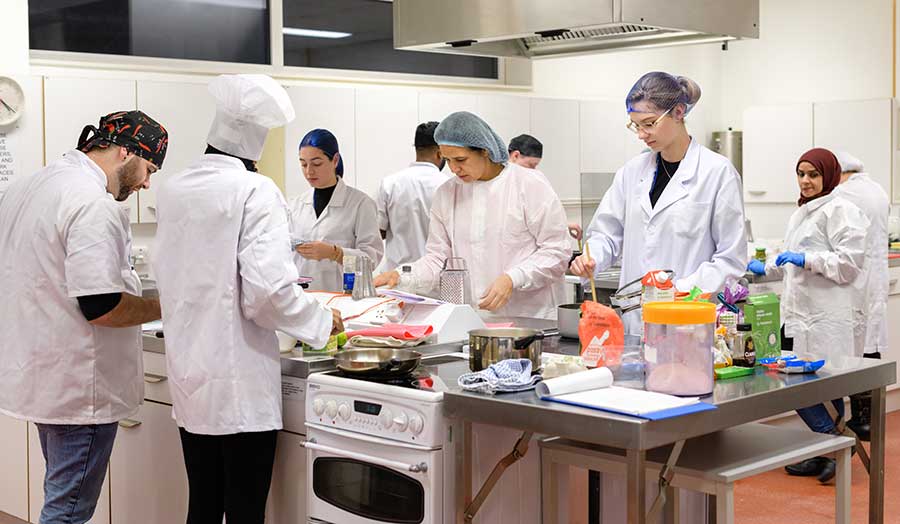
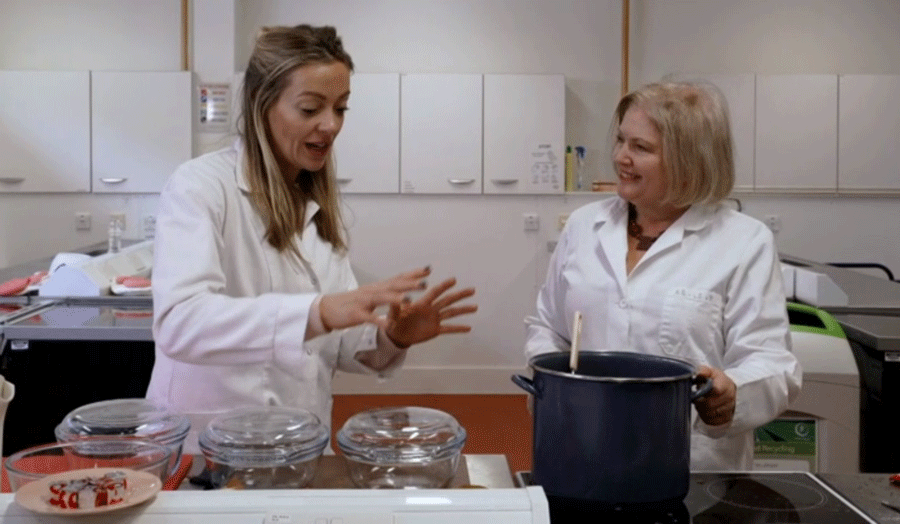
This degree focuses on food analysis and food microbiology as well as product development and quality control. You'll be taught by members of staff who are active within the Institute of Food Science and Technology, and are regularly involved in the food industry as expert consultants. You'll also learn from our food business development colleagues to gain experience in the industry through work placements.
Learn from industry professionals
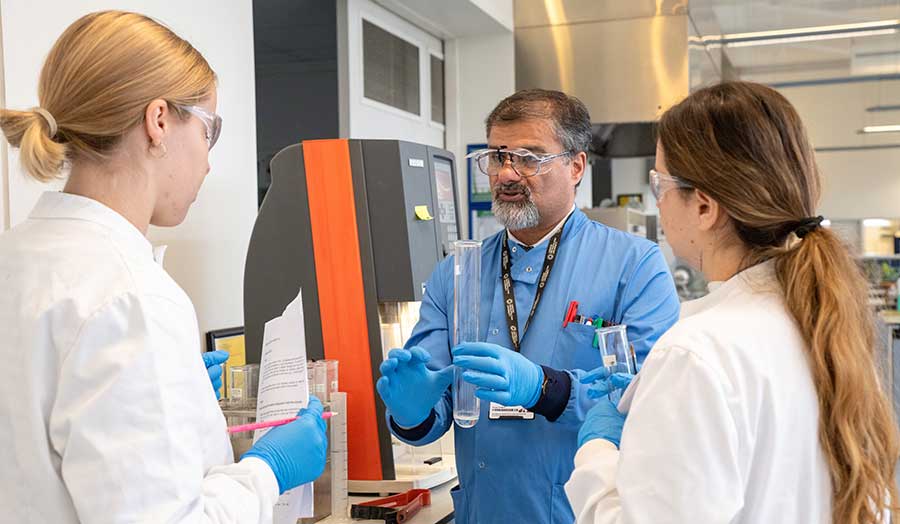
You'll be taught by members of staff who are active within the Institute of Food Science and Technology, and are regularly involved in the food industry as expert consultants
Learn about every aspect of food science
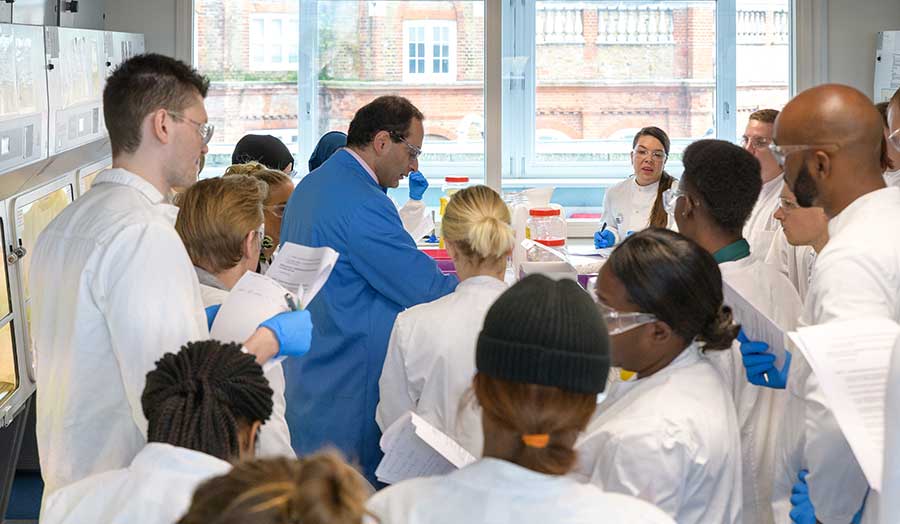
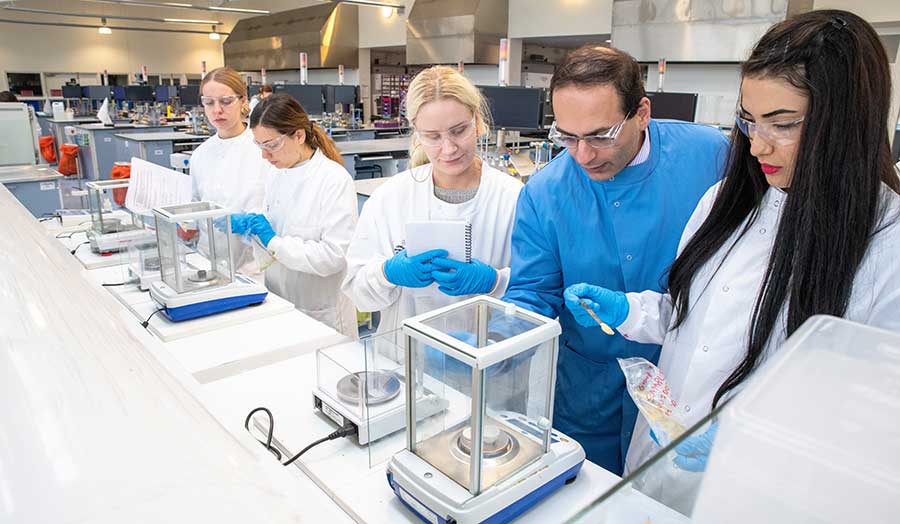
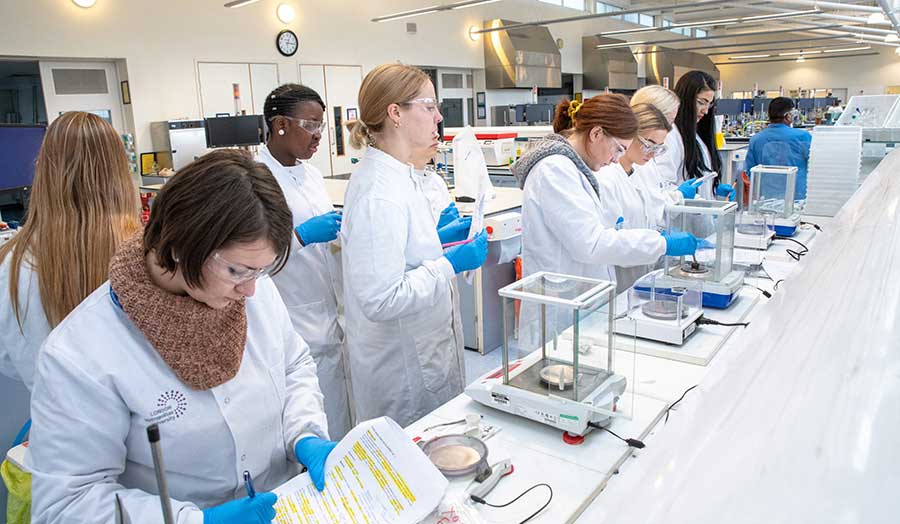
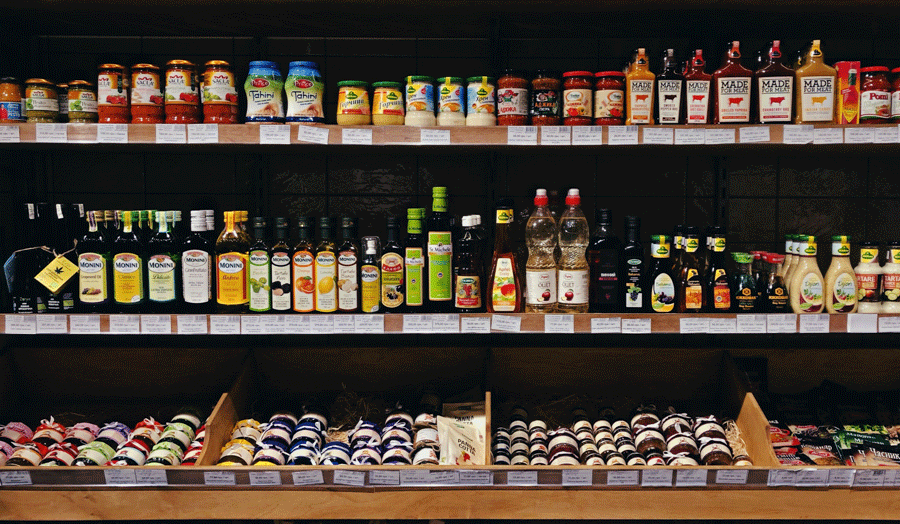
There is a huge range of modules offered on this course with analytical facilities available for study and research, and opportunities to be involved in food analysis, food product development and food manufacturing projects
Develop your skills across a wide range of food science topics
The course team has particular expertise in food analysis, food microbiology and including food safety, spoilage and fermentations, product development and quality control, as well as an excellent understanding of food sustainability, food policy and nutrition
Course details
You will be required to have:
- a lower second honours degree (or equivalent) in food science or a related subject such as microbiology, biochemistry, nutrition or agricultural sciences
Mature students with lesser qualifications but extensive appropriate experience will be considered on an individual basis.
Accelerated study
You have the opportunity to apply for credits based on previous experience gained in the food industry through Accreditation of Prior Experiential Learning (APEL).
Accreditation of Prior Learning
Any university-level qualifications or relevant experience you gain prior to starting university could count towards your course at London Met. Find out more about applying for Accreditation of Prior Learning (APL).
English language requirements
To study a degree at London Met, you must be able to demonstrate proficiency in the English language. If you require a Student visa (previously Tier 4) you may need to provide the results of a Secure English Language Test (SELT) such as Academic IELTS. This course requires you to meet our higher requirements.
If you need (or wish) to improve your English before starting your degree, the University offers a Pre-sessional Academic English course to help you build your confidence and reach the level of English you require.
The assessment strategy for this course not only assesses your knowledge, understanding and abilities but provides a wide range of experience particularly in key skill areas to prepare you for your future career in different areas of the food industry.
You'll gain experience in critical analysis, literature searches, poster presentations, data handling, and analysis and practical skills. Assessments comprise of written assignments, laboratory logs and poster presentations, and there are two exams. Students undertake a research project and submit a final dissertation that is defended in an oral exam.
The course is fully accredited by the Institute of Food Science and Technology (IFST). Students are encouraged to join the IFST as associate members and to attend meetings or industrial visits that the Institute organises. They may transfer to full membership after graduation and a period of professional experience. Membership of IFST allows access to specialist publications, meetings and an international network of food scientists and technologists.
The food industry is the UK’s largest manufacturing sector and there is a massive demand for qualified professionals. The skills and knowledge developed in your MSc will enhance your career opportunities in food and related industries including manufacturing, product development, marketing, environmental health, consultancy, research or education. Graduates are also well prepared for research and for postgraduate study (PhD). Interview practice with industry support and CV development is also integrated into the course.
Our recent MSc graduates have gone on to join the following positions and companies:
- food technologist – Haydens Bakery
- technical legislation coordinator – United Biscuits
- process development – Bakkavor
- technical team member – Food Partners Group
- quality control – Nestlé
- nutritionist and quality analyst – Krush Global
- business development manager – Kerry Group
- consumer technologist – Wealmoor Ltd
- microbiology technician – GlaxoSmithKline
- confectionary development – Sainsbury’s
- technical team manager – Nature’s Way Foods
- lecturers and researchers – London Metropolitan University, Coventry University, Kyushu University, University of Trinidad and Tobago, University of Melbourne
If you've already studied your undergraduate degree with us, as a graduate of London Met, you'll be entitled to a 20% discount on any further study with us.
* exclusions apply
Please note, in addition to the tuition fee there may be additional costs for things like equipment, materials, printing, textbooks, trips or professional body fees.
Additionally, there may be other activities that are not formally part of your course and not required to complete your course, but which you may find helpful (for example, optional field trips). The costs of these are additional to your tuition fee and the fees set out above and will be notified when the activity is being arranged.
How to apply
Use the apply button to begin your application.
If you require a Student visa and wish to study a postgraduate course on a part-time basis, please read our how to apply information for international students to ensure you have all the details you need about the application process.
When to apply
You are advised to apply as early as possible as applications will only be considered if there are places available on the course.
To find out when teaching for this degree will begin, as well as welcome week and any induction activities, view our academic term dates.
.png)